01.10.2025
Krāsotājs.pro
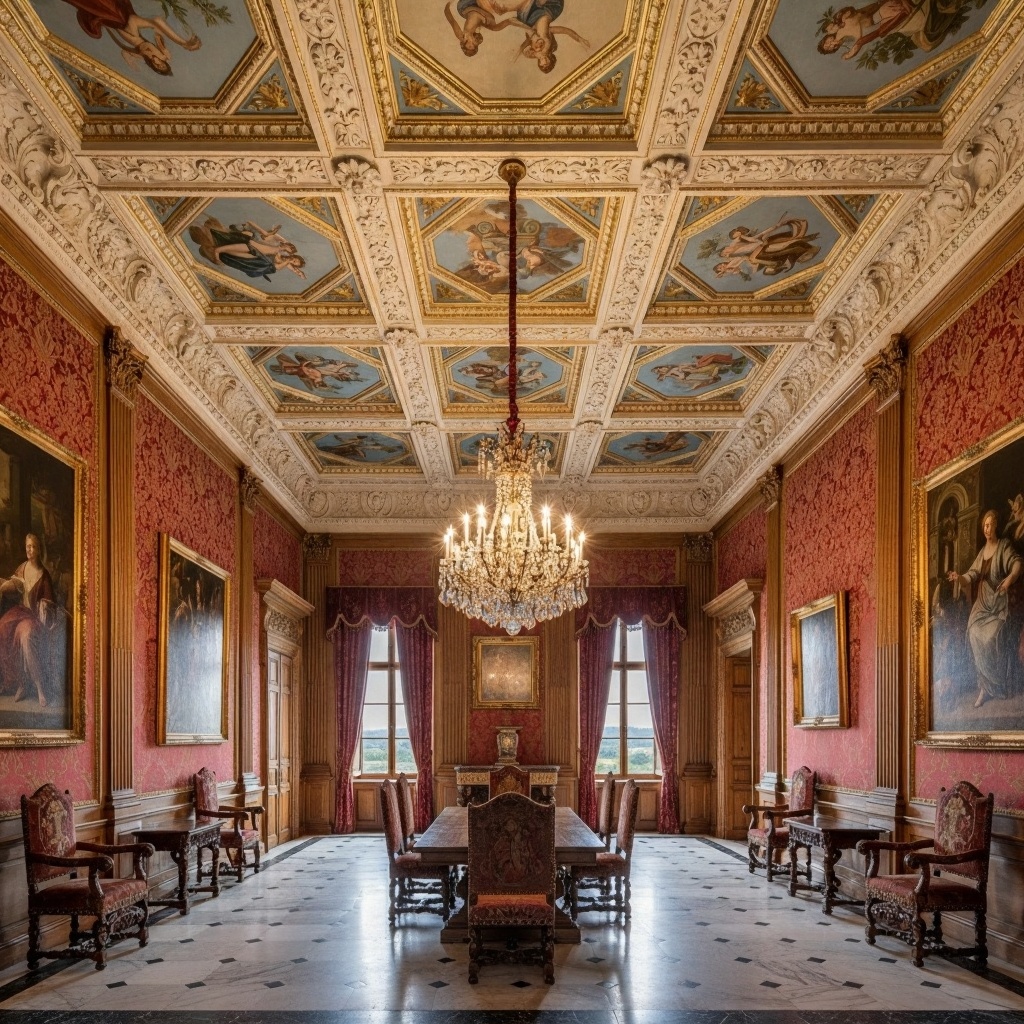
Historical Retrospective: Cornices Through the Ages
Decorative cornices are striking architectural accents that have adorned grand palaces and noble residences for centuries, creating a harmonious transition between walls and ceilings.
Architectural Styles:
- Renaissance (14th–17th c.): Strict symmetry, balanced proportions, acanthus leaves, and classical egg-and-dart motifs.
- Baroque & Rococo (17th–18th c.): Dynamic curves, rich sculptural relief, and dramatic gilded accents.
- Neoclassicism & Empire: Geometric purity, Greek key frets, laurel wreaths, and clean lines.
- Art Nouveau / Jugendstil (late 19th – early 20th c.): Flowing organic curves and floral motifs, iconic to the historic center of Riga.
Modern Materials:
Heavy, fragile plaster has evolved into advanced lightweight materials: Duropolymer (high-density polystyrene) and Polyurethane. They are 100% moisture-proof, impact-resistant, shrink-free, and readily accept all interior paint finishes.
Professional Installation Workflow:
Precision mitering with compound miter saws, specialized fusion-welding joint adhesives, seamless filling, and dustless sanding ensure joints remain completely invisible over time.